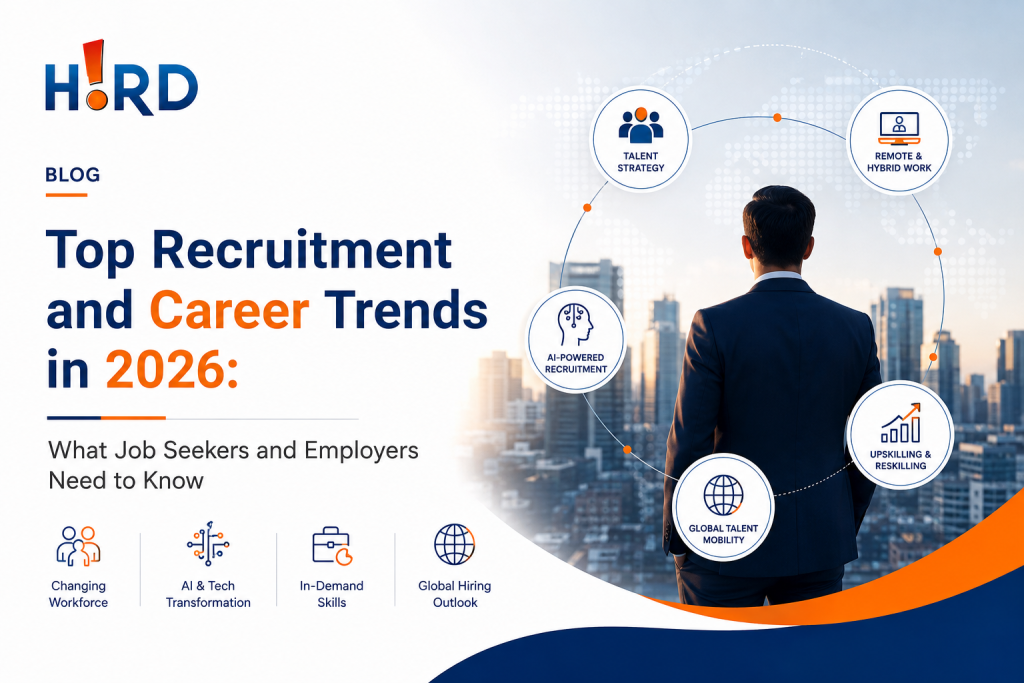
Discover the top recruitment and career trends shaping 2026 – from AI-powered hiring to skills-based recruitment – and learn how job seekers and employers can adapt.
The world of work never stands still, and 2026 is no exception. Whether you’re an employer trying to attract top talent or a professional looking to advance your career, understanding today’s hiring landscape is essential. In this guide, we break down the biggest recruitment and career trends of the year – and share practical tips to help you stay ahead.
1. AI Is Reshaping the Hiring Process
Artificial intelligence has moved from a buzzword to a core part of recruitment. Companies are using AI tools to screen resumes, schedule interviews, and even conduct initial candidate assessments.
For employers: AI can save time and reduce bias when used correctly, but it should complement – not replace – human judgment. A balanced approach that combines automated screening with genuine human review tends to produce the best hiring outcomes.
For job seekers: Optimizing your resume with relevant keywords and a clean, ATS-friendly format is more important than ever. Avoid overly complex designs that might confuse automated screening systems.
2. Skills-Based Hiring Is Replacing Degree Requirements
More companies are shifting away from strict degree requirements and focusing instead on demonstrable skills. This opens doors for candidates with non-traditional backgrounds, certifications, or self-taught expertise.
Tip for job seekers: Highlight specific, measurable skills and projects on your resume and LinkedIn profile. Certifications, portfolios, and hands-on experience can carry as much weight as a degree.
Tip for employers: Consider redesigning job descriptions to emphasize required competencies rather than credentials alone. This can widen your talent pool significantly.
3. Remote and Hybrid Work Remain a Top Priority
Flexibility continues to be one of the most sought-after benefits among candidates. While some companies are calling employees back to the office, many professionals still prioritize roles offering remote or hybrid arrangements.
For employers: Clearly communicating your work policy upfront in job postings helps attract candidates who are the right fit and reduces turnover down the line.
For job seekers: Be upfront about your preferences during interviews to ensure alignment with company expectations.
4. Employer Branding Matters More Than Ever
Candidates today research companies thoroughly before applying – checking reviews, social media presence, and employee testimonials. A strong employer brand can be the deciding factor between two similar job offers.
Action step for employers: Invest in showcasing your company culture through authentic content – employee stories, behind-the-scenes posts, and transparent communication about growth opportunities.
5. Soft Skills Are in High Demand
As automation handles more routine tasks, employers are placing greater value on soft skills like communication, adaptability, problem-solving, and emotional intelligence.
Tip for job seekers: Use specific examples in interviews to demonstrate these skills rather than simply listing them. Storytelling around real challenges you’ve solved leaves a lasting impression.
Employees are increasingly loyal to organizations that invest in their growth. Personalized learning paths, mentorship programs, and clear promotion criteria are becoming key differentiators for retaining talent.
For employers: Regular career conversations – not just annual reviews – help employees feel valued and reduce attrition.
For job seekers: When evaluating job offers, ask about growth opportunities and learning resources, not just salary and benefits.
7. Faster, More Transparent Hiring Processes
Long, drawn-out hiring processes frustrate candidates and can cause companies to lose top talent to faster-moving competitors. Streamlined interview stages and transparent timelines are becoming a competitive advantage.
Tip for employers: Communicate clear next steps after every interview stage, even if the update is simply “we need more time.”
Tip for job seekers: Don’t hesitate to politely ask recruiters about expected timelines – it shows professionalism and helps you plan your job search effectively.
Final Thoughts
Whether you’re building a team or building your career, staying informed about these shifts can make all the difference. Employers who adapt their hiring practices to prioritize skills, flexibility, and transparency will attract stronger talent. Job seekers who focus on demonstrable skills, personal branding, and clear communication will stand out in a competitive market.
Looking for expert guidance on hiring or career growth? Contact us today to learn how we can help you navigate the evolving job market.










 1.svg)


.svg)